Muffle Furnace About
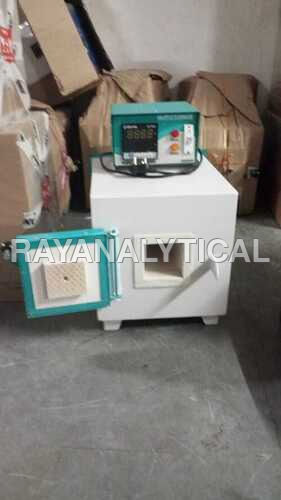
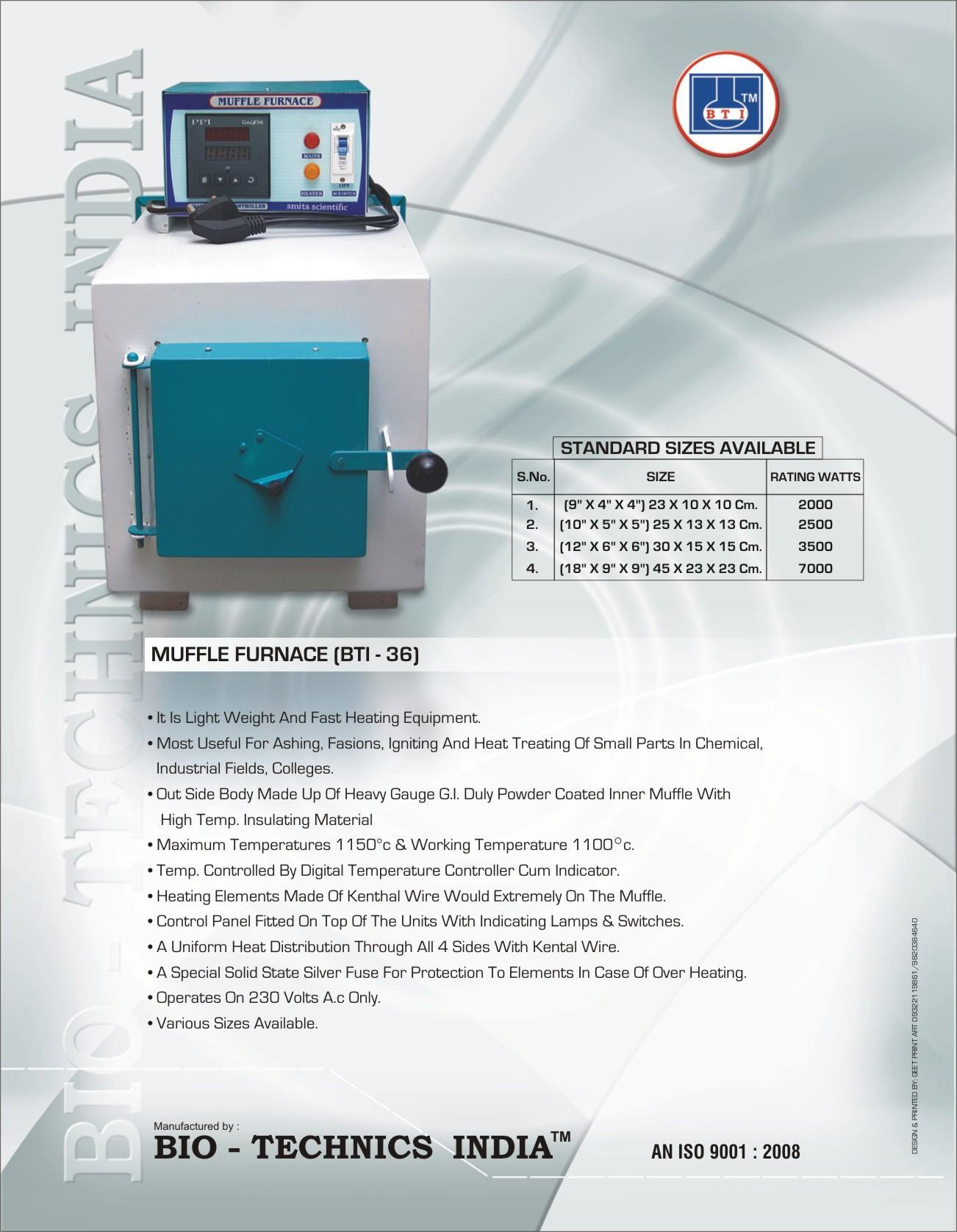
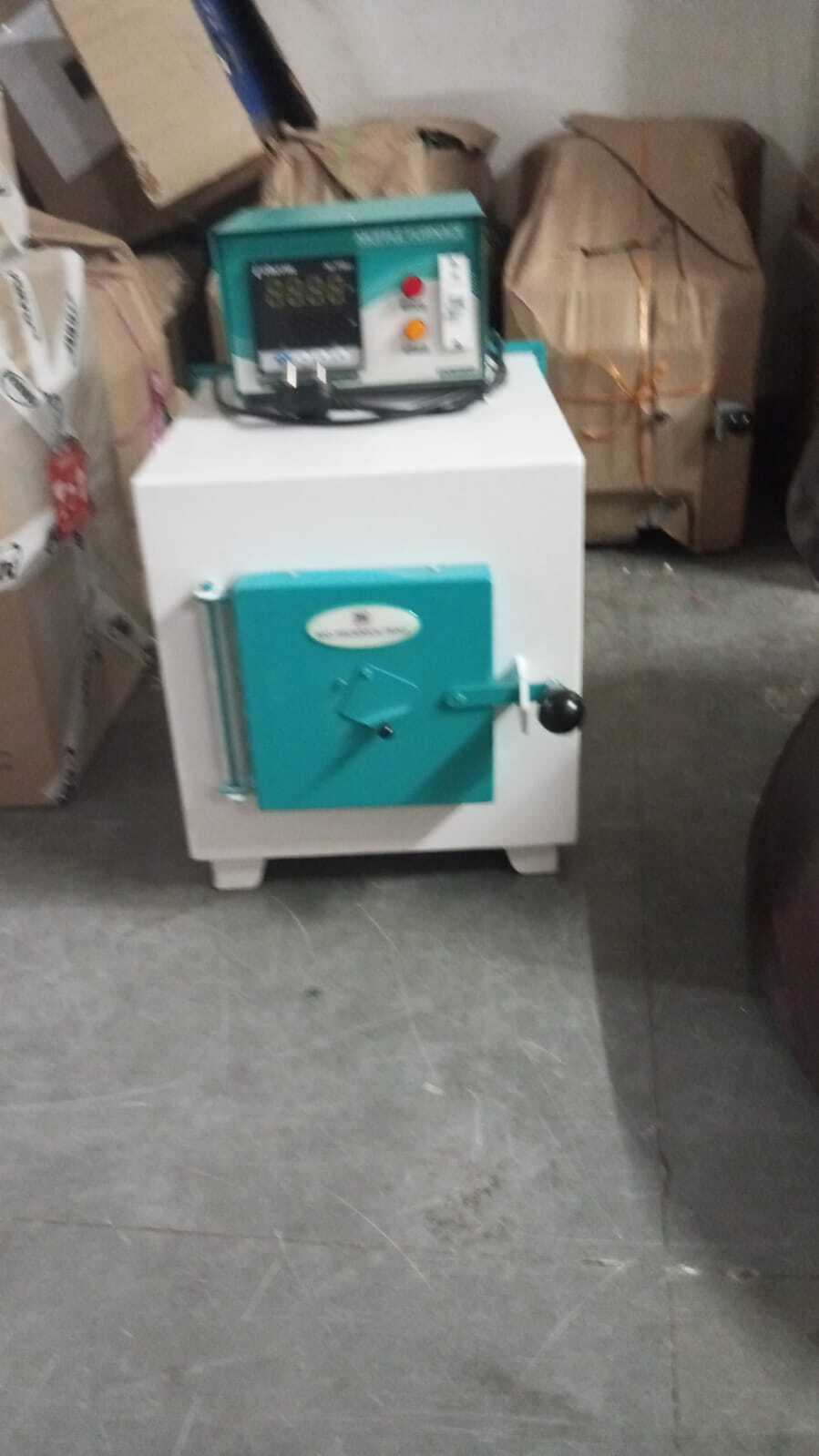
Muffle Furnace :( 1130 C) with Digital Temp.
Controlled
Model : BTI-36
Size in inches : 12x6x6
Rating watts : 3500
Specification:
Construction: Outer Body made of Mild Steel
powder coated. Inner Body made of ceramic
Muffle Kumar make.
Insulation: Special type ceramic Insulation
between body for Insulation.
Coil: A1 swaden make coil for long
lasting.
Temp Range: 400 C to max 1150C.
Accuracy: +/- 3 deg.
Temp Controlled by: PID Dual display to view
set & current temp.
Safety: Special type thermocouple fuses to
protect overheating.
Sensor: 'K type calibrated sensor
Make : Bio technics
Advanced Structure & Heating PerformanceThis muffle furnace utilizes high alumina ceramic fiber and a Kanthal (A1) wire element, supported by a substantial 100 mm insulation layer. Such construction fosters rapid heating and outstanding temperature resistance while minimizing heat loss. Its digital PID controller ensures precise temperature management, ideal for complex laboratory and research settings where accuracy is paramount.
User Safety and Accessibility FeaturesDesigned with laboratory safety in mind, the furnace comes equipped with over-temperature protection and an automatic cut-off mechanism to prevent unsafe conditions. The insulated front-opening door and cool-to-touch powder-coated exterior enhance handling, while the digital display allows for effortless monitoring and control.
Versatile Laboratory ApplicationsPerfect for ash content determination, material testing, and laboratory research, this muffle furnace caters to various scientific needs. With a stable chamber environment, temperature uniformity, and included ceramic tray, it streamlines preparation and analysis for consistent results.
FAQ's of Muffle Furnace:
Q: How does the muffle furnace maintain temperature uniformity inside the chamber?
A: The furnace utilizes high alumina ceramic fiber insulation and a Kanthal (A1) heating element, along with a microprocessor-based digital PID controller and a K-type thermocouple sensor, which collectively deliver temperature uniformity of 10C throughout the chamber.
Q: What materials can be safely tested or processed in this laboratory muffle furnace?
A: This furnace is ideal for a variety of applications including ash content determination, materials testing, and general laboratory research using samples that require controlled heating up to 1150C (continuous) or a maximum of 1200C.
Q: When is it recommended to use the included over-temperature protection and auto cut-off features?
A: These safety features are active during every operation; they monitor the internal conditions and automatically shut off the furnace if the set temperature is exceeded, protecting both the sample and equipment from damage.
Q: Where should this muffle furnace be installed in a laboratory?
A: Place the furnace on a stable, heat-resistant surface in a well-ventilated area, away from flammable materials. Ensure suitable access to a single-phase 220-240V, 50 Hz power supply for safe operation.
Q: What process does the digital PID controller follow to achieve accurate temperature control?
A: The digital PID controller continuously monitors chamber temperature via a K-type thermocouple, comparing it to the desired setpoint. It automatically adjusts the power supplied to the Kanthal heating elements to ensure rapid reaching and stable maintenance of the programmed temperature, within an accuracy of 2C.
Q: How energy efficient is this furnace during operation?
A: With 100 mm thick insulation and low heat loss design, the muffle furnace minimizes energy consumption while maintaining fast heating rates and stable internal temperatures, making it energy efficient for routine laboratory use.
Q: What are the main benefits of using this particular muffle furnace in laboratory research?
A: Users benefit from precise temperature control, safety features like over-temperature protection, durable construction with high alumina ceramic fiber, and convenient accessories, all of which foster reliable, reproducible results in research and materials testing.







 Send Inquiry



 Send Inquiry
 Send Inquiry
 Send SMS
 Call Me Free